


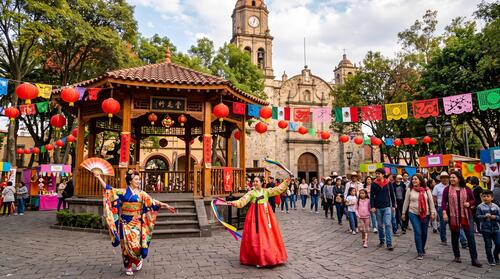
Mexico City is set to host a vibrant cultural immersion event this weekend, offering residents a chance to experience the traditions of the Asian continent without leaving the capital.
The Asian Cultures Festival, themed “The Four Doors of Asia,” will take place on Sunday, August 18, at the Centro de Convenciones Churubusco (IMSS) in the Coyoacán borough. The event is free to the public and will run from 11:00 AM to 5:00 PM.
Designed as a multi-sensory experience, the festival will showcase the music, literature, and gastronomy of nations including South Korea, Japan, and China. Attendees can expect a diverse program featuring:
Live performances of traditional music and dance.
A blessing ceremony led by Tibetan monks.
Exhibitions of Asian literature and art.
Interactive workshops on regional customs and lifestyles.
A marketplace featuring authentic Asian food and products.
For those using public transportation, the venue is accessible via Metro Line 2, stopping at the General Anaya station, followed by a short walk to the convention center.
Legislative Move to Protect Mexico’s “Popular Fairs”
In a separate cultural development, the Mexico City Congress is currently deliberating on a proposal to officially recognize “ferias populares” (popular fairs) as intangible cultural heritage.
The initiative, promoted by Morena Deputy Leonor Gómez Otegui, seeks to preserve the unique traditions of Mexico’s neighborhoods and towns. The proposal highlights that these fairs are not merely places of entertainment but are vital economic ecosystems. They represent a complex chain of labor involving families who manage mechanical rides, food preparation, transport, and artistic performances.
While the current proposal does not include immediate funding or economic support mechanisms, the goal is to initiate a formal discussion regarding the organization conditions and the needs of the families who sustain these traditions.
The bill was presented during an ordinary session on September 24 and has been referred to the Joint Committees of Cultural Rights and Boroughs and Territorial Limits for review. The move aligns with the UNESCO Convention for the Safeguarding of Intangible Cultural Heritage, which protects practices and expressions recognized by communities as part of their history.