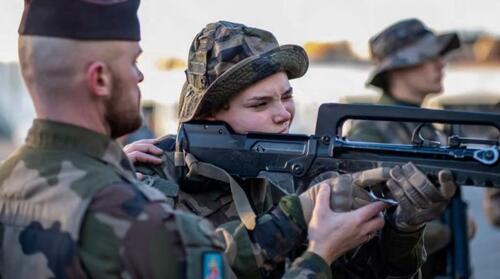
BRUSSELS — A looming question haunts many Mexican families living in Europe: if a major armed conflict erupts on the continent, would their children be forced to fight for a country that isn’t Mexico? While holding a Mexican passport, dual citizens may find themselves legally bound to the military obligations of their European nations, as Mexican citizenship does not exempt them from local defense requirements under European law.
The reality of this situation was highlighted by a message from the Belgian Ministry of Defense. In November 2024, many young people received letters stating: “Next year you will turn 18. It is an important stage in your life and a moment to decide your future. The Army offers you a unique opportunity: one year of voluntary military service.”
While this may seem like a standard recruitment drive for a nation seeking to bolster its defense, it has sparked deep anxiety among the thousands of Mexican families with dual nationality. Parents are grappling with a difficult question: would their children, who may have been born, raised, or built their lives in Europe, be willing to fight for those nations? Or would they seek to flee to Mexico to avoid conscription?
A Climate of Fear and Family Division
Families interviewed for this report—speaking on the condition of anonymity due to the sensitivity of the topic—shared a range of fears and uncertainties. The issue is deeply personal, involving the future of their children, questions of national loyalty, and decisions that could divide households or lead to social misunderstanding. Some parents fear being judged for wanting their children to avoid military service, while others worry their concerns might be seen as a lack of commitment to the country where their children have grown up.
These conversations are already circulating in private circles. “In a recent meeting, we discussed it among ourselves,” says Teresa, a Mexican mother whose teenage son also holds a Belgian passport. “A friend has a son with German nationality; another, a son who has already joined the Spanish army; and another, a son with British citizenship.” Though their specific nationalities differ, the underlying questions are identical: what military obligations do they face, what would happen if security in Europe deteriorates, and to what extent can parents influence the decisions of their children, who are nearing adulthood?
A Continent in Rearmament
The geopolitical landscape has shifted dramatically since the Russian invasion of Ukraine in February 2022. Coupled with uncertainty regarding U.S. security commitments under the Trump administration, European governments are moving to bolster their defense capabilities. According to the European Council, defense spending among EU member states could reach €454 billion this year—a 75% increase since 2021. Most European nations are currently executing plans to expand their armed forces and reserves, marking the most significant strategic shift and rearmament in the continent since the Cold War.
The Legal Reality of Conscription
While rules vary by country, the possibility of mandatory recruitment in the event of war remains a reality. For instance, Germany’s new military service model, implemented this year, is based on voluntary participation, but the law maintains mechanisms to adopt mandatory measures if personnel needs are not met and legal requirements are satisfied.
In France, regular mandatory military service is currently suspended, and new national service programs are voluntary; however, they explicitly include provisions for a “call to arms” to reach necessary defense numbers. In Spain, mandatory military service has been suspended since 2001, but the legislation still allows for the restoration of conscription under specific national security circumstances.