


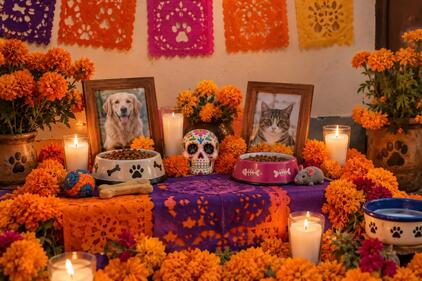
As the vibrant festival of Día de Muertos approaches, a growing tradition is finding a place in Mexican households: the creation of dedicated altars (ofrendas) for pets. While the holiday has historically focused on human ancestors, many families now seek to welcome their feline and canine companions back for a spiritual reunion.
When to Prepare the Altar
According to tradition, these pet-specific altars should be ready by the night of October 27, as it is believed that the souls of animals arrive between that night and the early morning of October 28.
Personalizing the Offering
The process for creating a pet altar mirrors that of human offerings but is deeply personalized based on the unique bond shared with a companion animal. Families typically include:
- Photographs of the pet.
- Water and food, ranging from standard kibble and treats to specific favorites like chicken.
- Personal items, such as well-loved toys or other objects the pet enjoyed during their life.
- Remains, such as an urn containing the pet’s ashes, if applicable.
The choice of items is left to the owner’s discretion, based on what they knew their “furry companions” enjoyed most in life.
Cultural and Indigenous Roots
The cultural roots of these displays are deeply embedded in indigenous beliefs. Traditionally, altars are placed over graves and adorned with flowers to help guide the ánimas (souls) on a safe journey.
According to the National Institute for Federalism and Municipal Development (Inafed), the tradition dictates that marigold petals (cempasúchil) be scattered and candles be lit to trace a path. This visual guide is intended to ensure that souls do not lose their way and reach their intended destination.
While the specific customs of Día de Muertos vary significantly from state to state and village to village across Mexico, the core philosophy remains universal: a profound commitment to gathering families to welcome loved ones home from the beyond.