


The government of Zacatecas has successfully solidified the role of its migrant community as an active and permanent stakeholder in the state’s public, economic, and social life. This shift comes five years after the implementation of a transversal and inclusive public policy for migratory governance under the administration of Governor David Monreal Ávila.
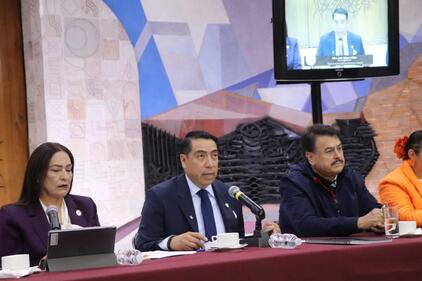
Iván Reyes Millán, head of the Secretariat for the Zacatecan Migrant (Sezami), presented these findings before the LXV State Legislature during the review of the Governor’s Fifth Progress Report. Reyes Millán emphasized that the migrant community is no longer just a line item in an agenda but a core component of the state’s general governance.
“That is what migratory governance means: that a need is heard, a proposal finds a channel, a decision becomes an action, and that action can be measured in results,” Reyes Millán stated, highlighting that the government’s approach has moved beyond isolated administrative tasks to address broader needs in economic development, infrastructure, security, and social identity.
Turning Remittances into Productivity
A key pillar of the current administration is the conversion of migrant economic participation into tangible productivity. Through the “Productive Remittance&rdquo initiative, the state has successfully channeled migrant contributions into equipment, income generation, and community strengthening.
In the past five years, accumulated investments from productive remittances have exceeded 334 million pesos, benefiting more than 431,000 people. Furthermore, the government invested 219 million pesos in six “Expo Ferias Agropecuarias,” benefiting over 1,000 migrant families across 50 municipalities—covering 85% of the state’s territory.
Infrastructure and Social Policy
In terms of physical development, the state launched the “2×1” Program. This initiative involves joint funding from migrant clubs, the state government, and local municipalities. To date, 93 million pesos have been allocated for 114 projects across 20 municipalities.
On the social front, Sezami has provided direct assistance to more than 23,808 Zacatecanos, particularly families in both Mexico and abroad. Services include documentation management, orientation, and institutional linking. Notable achievements include the resolution of long-standing identity issues through the “Constancia de Origen,” a document that is now accepted by all 53 Mexican consulates in the United States.
Security and Institutional Coordination
The administration has also prioritized security for those returning to the state. Through the “Heroínas y Héroes Paisanos” program, coordinated with the National Institute of Migration (INM), the government provides information and assistance during peak travel seasons. Between 2022 and the summer of 2026, the program recorded more than 952,000 assists.
Furthermore, Sezami has established 19 inter-institutional collaboration agreements at federal, state, and municipal levels. These partnerships have also yielded significant economic benefits; for example, coordination with the U.S. Consulate General in Guadalajara helped Zacatecas secure approximately $5 million USD monthly in federal benefits—a 24.6% increase since 2021, benefiting over 5,900 people.
“The numbers should not be read solely as expended resources, but as works, producers, families, tools, communities, and services,” Reyes Millán concluded, noting that migratory policy has evolved from a peripheral concern to a transversal pillar of the state government.