


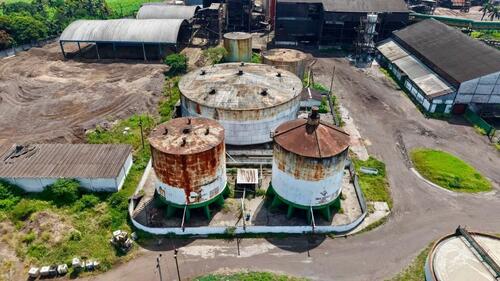
VERACRUZ, MEXICO — Municipal leaders from six municipalities in the Sotavento, Papaloapan, and Los Tuxtlas regions have issued a joint call to Grupo Porres, demanding the immediate surrender of the San Pedro sugar mill facilities to prevent a localized economic collapse.
In an open letter signed by the mayors of Lerdo de Tejada, Santiago Tuxtla, Tlacotalpan, Ángel R. Cabada, Saltabarranca, and Alvarado, the officials emphasized that the mill’s reactivation is a matter of regional survival. They asserted that the ongoing delay in reopening the plant directly threatens the livelihoods of more than 7,000 families and jeopardizes a vast economic chain that includes cane farmers, factory workers, transporters, hoteliers, restaurateurs, and local merchants.
“As municipal authorities and representatives of the social and productive sectors, we consider the delivery of the facilities to be a matter of urgency that must be concluded without further delay,” the document stated. “This is not about confrontation; it is about guaranteeing that the mill returns to operation so that the region’s economic activity can recover.”
The crisis began on August 5, when the owners of the mill announced its closure, citing a lack of economic profitability. Despite subsequent efforts by federal and state governments to find viable solutions, the facility remains idle. To comply with the legal requirements of the United States-Mexico-Canada Agreement (USMCA), a trust known as “San Pedro VER” was formed on September 19 by unionized workers, authorities, and other stakeholders.
However, officials report that Grupo Porres has ignored repeated requests to hand over the premises. The urgency of the situation is underscored by the approaching “zafra”—the annual cane harvest season—which requires immediate maintenance and repairs to the infrastructure.
The mayors also expressed their full support for Governor Rocio Nahle Garcia, urging her to take decisive action. “Governor Rocio Nahle Garcia: in this battle, you are not alone; you have the backing of the municipal authorities and the social and productive sectors of this region,” the leaders stated. “The mill must work again—for its workers, for our cane farmers, and for the thousands of families who depend on this activity.”