Faith Meets Heritage: Indigenous Roots Thrive Within San Cristóbal’s Muslim Community
In the highlands of Chiapas, Mexico, a unique cultural synthesis is unfolding in the city of San Cristóbal de Las Casas. A community of nearly 1,000 Muslims is demonstrating that Islamic faith and indigenous Mayan heritage can coexist harmoniously, preserving ancestral languages, customs, and traditions while embracing a new religious identity.
Ibrahím Checheb, a representative of the Ahmadia Muslim community, explains that the conservation of their cultural roots is not only compatible with Islam but serves as a cornerstone for peaceful coexistence with other religious groups in the region. The community members continue to speak native Mayan languages—including Tsotsil, Tseltal, and Tojolabal—and maintain their traditional dress, gastronomy, and customs.
“We must preserve any healthy custom passed down to us by our parents and grandparents,” Checheb stated. However, he noted that the community has consciously moved away from certain practices, such as the consumption of pox (a traditional alcoholic beverage), citing the negative impact of alcohol on family structures.
The Muslim presence in San Cristóbal is a relatively recent phenomenon. Checheb noted that the first groups began settling in the city between 1995 and 1996, following the 1994 uprising of the Zapatista Army of National Liberation (EZLN). Today, the community is organized into four distinct meeting spaces, including a group initially composed of Spaniards, a community in Molino de los Arcos, another on the road to Chamula, and the Ahmadia community located in the Nueva Esperanza neighborhood.
San Cristóbal, a city with a long history of hosting diverse indigenous populations and religious groups, has shown strong acceptance of the Muslim population. “San Cristóbal is a place where many populations from different indigenous communities have been welcomed,” Checheb remarked. “Here, one can practice the faith they choose, and it is shared among all religious confessions.”
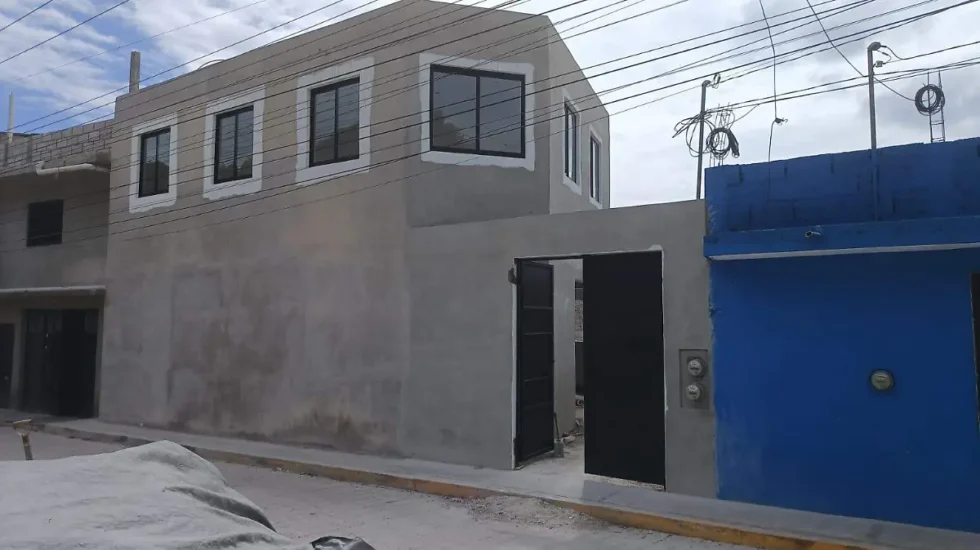
As part of its growth, the Ahmadia community is currently constructing a fourth mosque on land donated by Checheb’s maternal grandfather. Construction began seven months ago and is expected to conclude by the end of this year, with a formal inauguration planned for March 2027.
The new facility will feature a two-level design: the ground floor will be dedicated to women, while the upper level will be for men. The complex will also include a library, restrooms, corridors, a kitchen, and gardens.
Checheb emphasized that the community is composed of families and couples, reiterating that religious participation is entirely voluntary. “The Quran mentions that there is no compulsion in religion,” he explained, highlighting the community’s commitment to religious freedom.