Nissan to Use Mexico as “Test Lab” to Counter Chinese Auto Surge
Nissan Americas is pivoting its manufacturing strategy, positioning Mexico as a critical “testing laboratory” to overhaul production costs and shield the company from the rapid expansion of Chinese automakers in North America. The move comes as a stark wake-up call for the Japanese automaker, which has long dominated the Mexican market but now faces an aggressive price war from overseas rivals.
Speaking at a meeting with suppliers in Detroit, Christian Meunier, President of Nissan Americas, signaled that the company has a two-year window before Chinese manufacturers begin producing vehicles on Mexican soil. Once production localizes, these brands will be able to bypass import tariffs, potentially flooding the market with vehicles that are currently up to 30% cheaper than traditional models.
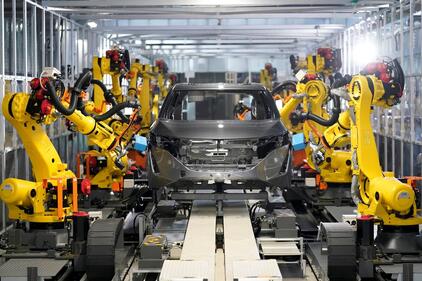
The threat is already tangible. Chinese brands have rapidly climbed to a 10% market share in Mexico. While recent tariffs have provided a temporary buffer, Nissan executives recognize that the “clock is ticking.” To compete, the company plans to implement a rigorous overhaul of its manufacturing processes, including shortening model development cycles, aggressively optimizing the supply chain, increasing automation, and simplifying engineering requirements.
“Mexico will be a very good ground for us to experiment and learn” how to match Chinese cost structures, Meunier told reporters, according to reports by Reuters.
The urgency in Mexico reflects a broader crisis for Nissan in the United States. Over the last decade, Nissan’s U.S. market share plummeted to approximately six percent, far from its historical peak. Meunier admitted that the current U.S. cost structure is no longer sufficiently competitive to withstand the onslaught of low-cost imports.
While the U.S. market currently benefits from trade barriers and software restrictions that may delay the full impact of Chinese competition for another five to ten years, Nissan is working to revitalize its presence. The brand is launching a series of updates, headlined by the hybrid version of the Rogue compact SUV. Looking further ahead, the company plans to introduce several robust SUVs built on truck chassis, including the return of the Xterra—a popular off-road model that was discontinued in the U.S. in the mid-2010s.
The disparity between the two sides of the border is striking: while the U.S. relies on protectionist policies to buy time, Mexico is already feeling the direct impact of Chinese exports. The success of Nissan’s “Mexican experiment” will determine whether the brand can successfully slash costs without compromising quality, providing a blueprint for its survival in the North American market before its window of grace closes.