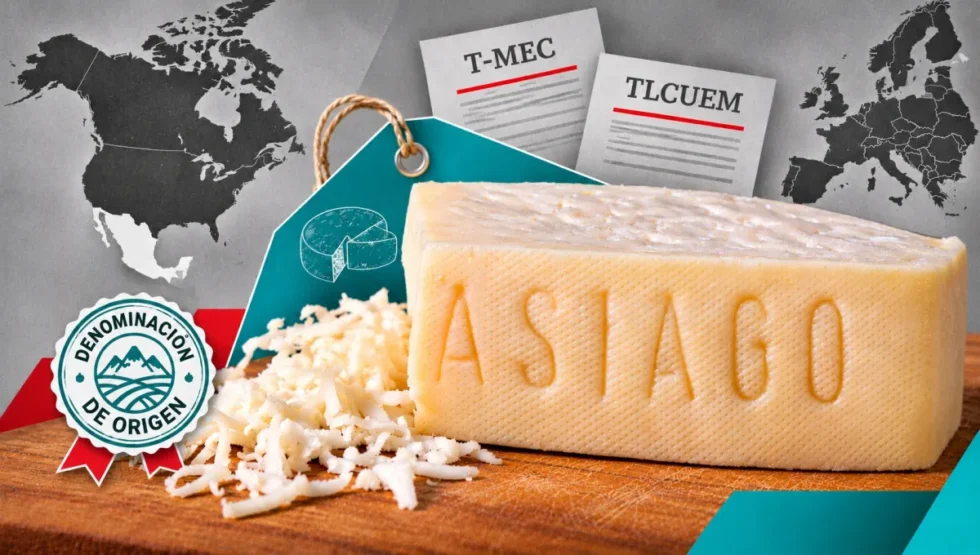
The European Union has signaled its firm stance on protecting geographical indications (GIs) as part of the modernization of its trade agreement with Mexico, despite significant pushback from American dairy producers. The dispute centers on the use of prestigious names such as Feta, Asiago, and Gruyere—terms that the U.S. argues should be considered generic, while the EU insists are tied to specific traditional methods and regional heritage.
Brussels maintains that these protections are essential to preserve the livelihoods of small-scale producers and maintain the integrity of traditional production methods. Conversely, U.S. manufacturers express concern that these new regulations will impose commercial restrictions on their ability to market cheeses in Mexico under names they have utilized for decades.
Addressing questions regarding whether U.S. pressure could influence the EU’s commitments to Mexico, Viktoria Lovenberg, a trade counselor at the European Union Embassy in Mexico, defended the established agreements. She noted that the responsibility for managing the relationship with Washington lies with Mexican authorities.
“Mexico has its own negotiations with the United States, and it is the responsibility of those negotiators to carry out these agreements,” Lovenberg stated.
She further explained that Mexico and the EU share a common vision regarding the importance of protecting products linked to specific regions and production techniques. This shared perspective is a cornerstone of the modernized agreement, which is currently undergoing final legal procedures to take full effect.
The Economic Ripple Effect
The implementation of these protections does not mean that specific cheeses will vanish from supermarket shelves overnight. However, it creates a significant compliance hurdle for manufacturers. Companies will be required to audit their current product lines to ensure that the denominations they use comply with the new provisions. Non-compliance could lead to substantial costs, including mandatory relabeling, the overhaul of advertising campaigns, and the potential withdrawal of non-compliant goods from the market.
“This does not mean these cheeses will disappear or that they can no longer be called by these names,” explained Aurora López-Portillo, a senior international intellectual property consultant and Director of Legal Services at ClarkeModet Mexico.
López-Portillo clarified that while the USMCA (United States-Mexico-Canada Agreement) does not prohibit the protection of European geographical indications, it does establish transparency guarantees, mechanisms for filing objections, and the recognition of prior rights.
The friction between the two trading partners stems from a fundamental disagreement: who has the right to a name? For the European Union, names like “Feta” identify products bound to specific regional identities. For U.S. manufacturers, these terms have often been used as generic marketing tools for cheeses produced far outside of Europe.
In response, organizations such as the National Milk Producers Federation and the US Dairy Export Council have urged Washington to defend the use of these terms during the USMCA review process. Their primary concern is that European protections will shrink the market share of American producers in Mexico, a key export destination for U.S. dairy products.
Opportunities for Mexican Producers
The dispute also highlights potential opportunities for domestic Mexican industries. Italy, a major proponent of these protections, argues that geographical indications are vital for protecting small and medium-sized enterprises. Alessandro Modiano, the Italian Ambassador to Mexico, emphasized that these rules can prevent “imitations” and protect the value of authentic goods.
Modiano pointed out that these provisions could benefit Mexico by protecting its own traditional products whose value depends on origin and craftsmanship. He cited the success of Mexican Cotija cheese as a prime example. Lorenzo Vianello, president of the Mexico-Italy Bilateral Business Committee, noted that the systematization of the Cotija cheese brand—supported in part by Italian collaboration—saw prices for local producers rise by 200% and opened doors to international exports.
By preventing non-compliant products from using these names, the EU aims to stop others from profiting from the reputations of authentic regional goods.
Looking Ahead
The negotiation continues as Mexico and the EU move toward the full application of their modernized agreement. The deal includes an interim commercial agreement to fast-track market access, alongside a broader global agreement covering political cooperation, trade, and investment.
Once completed, the agreement is expected to eliminate 95% of the high Mexican tariffs currently affecting European agro-food products. While the legal hurdles remain, the move represents a significant shift in the global trade landscape regarding the protection of cultural heritage in the food industry.