


BRUSSELS – Mexico continues to face international scrutiny regarding its management of extractive industries, remaining suspended from the “Validation” process of the Extractive Industries Transparency Initiative (EITI). The suspension, which originated during the administration of Andrés Manuel López Obrador, remains unresolved under the current government of Claudia Sheinbaum.
The EITI Council, headquartered in Norway, suspended Mexico’s validation status in June 2022 after the country received a “low” score of 49.5 out of 100. The international body concluded that Mexico failed to meet essential requirements regarding civil society participation and fell short of transparency benchmarks in the mining sector.
Four years later, Mexico has failed to regain its full status. The EITI currently classifies the country as suspended due to “insufficient stakeholder participation, lack of progress, and failure to meet reporting deadlines.”
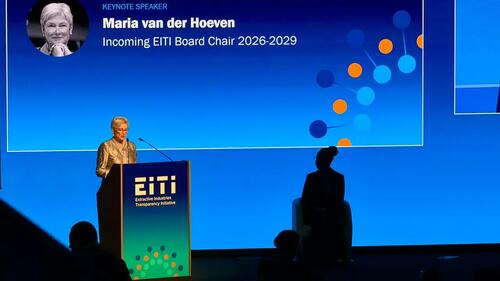
This lack of progress has had immediate diplomatic and professional repercussions. During the EITI Global Conference held in Brussels on October 8-9, Mexico was notably absent from the roster of speakers, while neighboring Latin American nations—including Chile, Colombia, Argentina, and Ecuador—maintained active participation.
A Global Standard at Stake
The EITI is the primary international benchmark for promoting transparency and accountability in the management of natural resources. With over 50 participating countries, the initiative demands that governments, corporations, and civil society work in concert to disclose critical data on oil, gas, and mining. This includes information on concessions, contracts, production volumes, state revenues, payments to the government, and the identification of ultimate beneficial owners of companies.
For Mexico, these standards are of paramount economic and strategic importance. The country joined the EITI in 2017 with the goal of cleaning up sectors historically plagued by controversy. While the 2022 evaluation acknowledged significant strides in the oil and gas sectors, it highlighted severe deficiencies in mining transparency. Specific failings included the disclosure of licenses, contract transparency, data reliability, and information regarding social and environmental spending.
Furthermore, the EITI identified a systemic failure in creating an environment where civil society could engage in “full, active, and effective” dialogue regarding extractive industries.
Suspension vs. Exclusion: A State of Limbo
It is important to distinguish Mexico’s current status: the country has not been expelled from the EITI. Instead, “suspension” means that while Mexico remains a recognized member of the mechanism, its current implementation does not meet international requirements. To regain full status, the government must implement corrective actions that are subsequently verified by a new independent evaluation.
While the current administration has reported some activity—including the delivery of data from 2020, 2021, and 2022 by state oil company Pemex—these efforts have not yet triggered a formal re-evaluation.
The road to recovery has been marked by further delays. A previously scheduled evaluation for April 2026 was postponed in late 2024. The EITI has since removed Mexico from the official validation calendar, listing the country’s status as “to be confirmed.”
Consequently, Mexico remains in a transitional state of governance. While the government has technically reactivated technical groups and data submissions, the lack of a certified international evaluation means that the transparency gaps identified four years ago remain officially unaddressed under the Sheinbaum administration.