


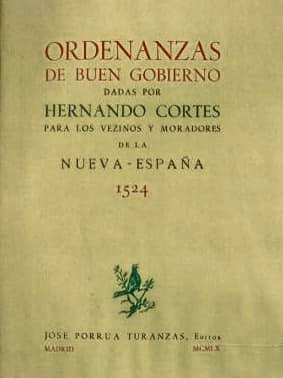
A viral image of Hernán Cortés’s 1524 “Ordinances of Good Government” (Ordenanzas de Buen Gobierno) has sparked a fresh debate over the conquistador’s legacy. While the document provides a veneer of humanitarian concern, historians argue it represents only one side of a much more complex and exploitative reality.
The document, held in the Archive of the Indies (AGI), contains a striking mandate: it forbids the physical mistreatment of indigenous people, ordering that they be fed well and granted rest on Sundays and major religious holidays. For its time, this was considered a progressive law. It was born out of a strategic fear among Spanish officials—a desire to avoid repeating the demographic collapse seen in the Caribbean, where extreme exploitation had decimated the Taíno population.
However, experts warn that viewing this single document as a complete portrait of Cortés’s actions is a historical oversimplification. The reality of the conquest was defined by the encomienda system and the legal ownership of enslaved people.
The historical evidence paints a starkly different picture:
- A Primary Encomendero
While the law spoke of protection, the economic reality was one of massive scale. In 1529, Cortés was granted the encomienda of 23,000 indigenous people. Under this system, he held significant authority over their labor and lives. - The System of Slavery
Beyond the encomienda, Cortés utilized “slaves of war”—indigenous people captured in conflict. This practice remained legal until 1542, and these individuals were often branded with hot irons. Cortés operated as a massive commercial enterprise, utilizing enslaved labor in his mines in Taxco, Sultepec, and Tehuantepec, as well as in his sugar mills in Cuernavaca and Tuxtla. - Documentation of Ownership
The scale of his private ownership is supported by meticulous records. In 1539, Cortés signed a donation in Coyoacán of 100 enslaved people from his Taxco mines to be divided among his three sons. His 1547 will further detailed the distribution of lands and enslaved people among his nine children. Furthermore, an inventory conducted two years after his death revealed that his holdings in Cuernavaca alone included 188 enslaved indigenous men and women.
Ultimately, the historian’s perspective suggests that the 1524 ordinances were a legal maneuver designed to satisfy the Spanish Crown’s requirements while maintaining a structure of deep exploitation. The “good government” of the paper was frequently overshadowed by the brutal reality of the encomienda and the vast commercial empire Cortés built on the labor of the conquered.