New Police Recruitment Hurdles Threaten Tamaulipas’ Highway Safety Infrastructure
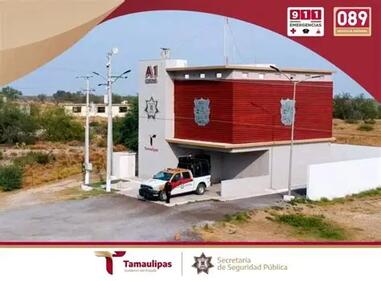
The expansion of “Safe Stations” (Estaciones Seguras) across the state of Tamaulipas is facing a significant hurdle as a shortage of personnel threatens to stall the program’s operational goals. While 15 new facilities are being constructed at strategic points and along major highways, local officials warn that the state must accelerate police recruitment to make these bases functional.
Marco Gallegos Galván, a local deputy and president of the Public Security Commission of the State Congress, noted that while several bases in the border region have been completed and some are already active, more officers are required to ensure all installations can maintain permanent operations.
The new facilities are already equipped with patrols, video surveillance cameras, and advanced communication systems. However, Gallegos Galván cautioned that these technological resources are insufficient without enough agents to conduct the necessary prevention and surveillance tasks in the areas where the stations are located.
One of the primary obstacles to bolstering the state’s manpower is the rigorous vetting process. Gallegos Galván indicated that very few applicants successfully pass the “trust and confidence” exams conducted by the Tamaulipas Public Security Secretariat (SSP), creating a bottleneck for the incorporation of new officers into the force.
The expansion focuses on key transit arteries, including the Ribereña highway and the corridors connecting Reynosa, Río Bravo, and Matamoros, where the goal is to strengthen the security presence on major roads.
Specific projects include three stations for Reynosa: one in Laguna La Escondida, which was managed outside the original budget and is expected to be delivered this year, and two others planned for the Jarachina and Juárez sectors. Regarding the latter, Gallegos Galván explained that while they were promoted through the State Congress, their budgetary progress depends on the Public Security Secretariat delivering the necessary technical projects to move forward.
The deputy emphasized that the growth of security infrastructure must occur in tandem with the recruitment and training of new personnel. Without a synchronized approach, the intended purpose of the Safe Stations—maintaining constant vigilance on highways and strategic zones—remains at risk.