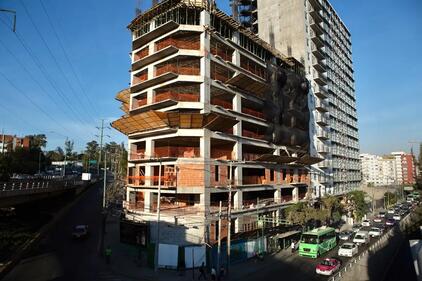
MEXICO CITY — The capital of Mexico is facing a critical housing crisis as formal construction production has plummeted by 50%, hitting a historic low while the region’s demand for new homes continues to skyrocket.
According to recent data, only 490 housing units were recorded in Mexico City between January and October 2026. This figure represents a sharp decline from the peak of 2,644 units recorded in 2015 and marks the lowest production level since the formal tracking began in 2013.
The collapse in supply stands in stark contrast to the growing needs of the Valley of Mexico Metropolitan Area (ZMVM). A recent diagnostic report indicates that the region will require an additional 800,000 housing units by 2030 to accommodate population growth and new households. This equates to a required annual production of approximately 161,000 units—a target the capital is currently nowhere near meeting.
A Regional Divergence
While Mexico City struggles with stagnation, other states are experiencing a construction boom driven by federal initiatives. The “Vivienda para el Bienestar” program has acted as a significant catalyst for growth elsewhere in the country. For instance, during the same period in 2026, the state of Nuevo León registered 14,418 new homes, while Jalisco reached 11,292. In comparison, Mexico City’s output remains negligible.
The Barriers to Development
Experts point to a “perfect storm” of factors stifling development in the capital. Chief among them are the exorbitant costs of land and a labyrinthine bureaucracy.
Leonardo González, an economist and co-founder of the consultancy Homepty, noted that the time required to obtain construction permits and finalize sales can exceed two years. This lengthy timeline significantly increases financial risk and costs for developers. Furthermore, Mexico City remains the most expensive city in the country for real estate; the average home price reached 4.2 million pesos in the third quarter of this year, far exceeding the national average.
Regulatory Uncertainty and Capital Flight
The private sector is also expressing growing frustration over regulatory shifts. Recent measures, including rent caps and restrictions on using residential properties for tourism, have created a climate of uncertainty.
Carlos Valladares, Director General of the Rental Housing Association (AVER), highlighted a dramatic shift in investment patterns. A decade ago, 80% of private real estate capital was concentrated in Mexico City; today, that figure has dropped to less than 20%. Investors are increasingly pivoting toward markets like Querétaro, Mérida, and various northern cities where the regulatory environment is more favorable.
The current trajectory warns of a deepening social crisis. As the formal market remains inaccessible, many residents are being forced to seek alternatives, ranging from renting in increasingly distant areas to occupying irregular housing or informal settlements.