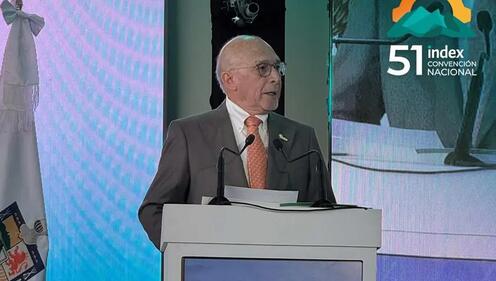
MONTERREY, Mexico – Mexican industrial exporters are pushing for a comprehensive overhaul of the IMMEX program, proposing a “4.0” update to President Claudia Sheinbaum. The initiative aims to modernize the country’s manufacturing framework to meet the demands of a global market where speed and advanced technology have become the primary drivers of competition.
Humberto Martínez, president of Index (the Mexican Institute of Industrial Exportation), introduced the proposal during the 51st National Convention of Index in Monterrey. He emphasized that the goal is not merely to update a program but to equip Mexico with the necessary tools to compete in the next era of global manufacturing.
A Comprehensive Industrial Agenda
The IMMEX 4.0 proposal is part of a broader agenda that includes providing certainty for investments, improving infrastructure, securing energy and water supplies, and fostering talent development. Martínez stressed that Mexico’s opportunity in the ongoing industrial reorganization depends on decisive coordination to transform these goals into tangible results.
According to Martínez, the manufacturing sector requires a strengthened IMMEX program that simplifies processes and accelerates digitalization. He called for a regulatory environment that rewards compliance, allowing companies to focus on production, innovation, and value creation. Index plans to formally present this proposal to President Sheinbaum during October.
Addressing USMCA Uncertainties
The push for modernization comes at a critical juncture for North American manufacturing. Martínez highlighted that both technological transformation and shifting geopolitics are heavily influencing investment decisions. In this context, he identified “certainty” as the indispensable condition for companies to invest, produce, export, and plan for the long term.
Regarding the upcoming review of the USMCA (United States-Mexico-Canada Agreement), Martínez called for a discussion based on technical arguments and a strategic vision. He argued for a defense of the integrated production chains shared between Mexico, the United States, and Canada—chains that rely on shared processes, technology, and talent across borders.
Infrastructure and Talent: The Pillars of Growth
The industrial sector maintains that the update of IMMEX cannot stand alone. Martínez underscored that any industrial strategy will fail if it does not comprehensively address infrastructure, energy, water, logistics, and productivity.
He called for a vision that transcends individual administrations, seeking recognition for the export manufacturing sector’s ability to drive innovation and generate high-quality jobs. Currently, the sector supports approximately 3.3 million direct jobs and an additional six million indirect jobs, providing a significant labor dimension to the demand for modern manufacturing tools.