


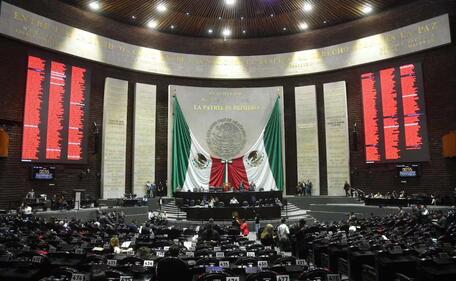
MEXICO CITY — The Mexican Chamber of Deputies has approved the general draft of the Federal Rights Law for 2027. The new legislation establishes the fees that individuals and entities must pay for the use of public assets, state-provided services, and environmental rights.
The bill passed with 329 votes in favor from the Morena, PT, and PVEM parties, against 117 votes from the PRI, PAN, and MC. While the government framed the move as a modernization of federal costs, opposition lawmakers warned of drastic price surges, with some fees set to increase by as much as 1,000%.
Significant Fee Increases and Cost Adjustments
The new law outlines a comprehensive update of prices and tariffs for federal goods and services. Key highlights include:
- Environmental Fees: An average 30% increase in fees for environmental procedures, including authorizations for forest land use.
- Health Services: An upward modification in the costs of 29 sanitary services required for licenses and registrations.
- Banking Supervision: A 16% increase in fees for registration, inspection, and oversight by the National Banking and Securities Commission (CNBV).
- Migration and Consular Services: A restructuring of fees for migration services at airports, borders, and the issuance of documents abroad. This includes a consular fee of $41, foreign visas at $56, and visitor visas without work permits at $54.
To protect consumers from inflation, the government agreed to freeze the fees for the use of the radio-electric spectrum in the key 600 MHz and 700 MHz bands.
Free Access to Cultural Sites
In a move to promote cultural tourism, the law completely eliminates entry fees for 53 museums, monuments, and archaeological zones across the country, aiming to guarantee free cultural access to the general population.
During the presentation of the bill, Carol Antonio Altamirano, President of the Finance Commission, highlighted three key modifications resulting from dialogue with social and private sectors:
- A reduction in the planned increase for foreign tourists entering the country for tourism.
- Updated classifications for various coastal zones to adjust fees for the use of maritime-terrestrial and coastal environments.
- An exemption for domestic and foreign residents in Mexico to access protected natural areas containing museums, monuments, or archaeological zones on Sundays.
Controversy Over “Excessive” Health Costs
The legislation has faced sharp criticism from opposition members. PAN deputy Héctor Saúl Téllez Hernández denounced price spikes of up to 1,000%, specifically pointing to the health sector. He highlighted that the license for blood transfusion services would jump from 1,482 pesos to 17,349 pesos, calling it an “excessive” increase for a basic health service.
In defense of the law, Morena deputy Claudia Rivera Vivanco argued that the new framework will allow for a more efficient and just Mexican State, facilitating technological investment, poverty reduction, and the strengthening of security and education.
Following the general approval, the Chamber moved to the individual debate to review specific articles of the law.